The History of Numerology: Where the Numbers Came From
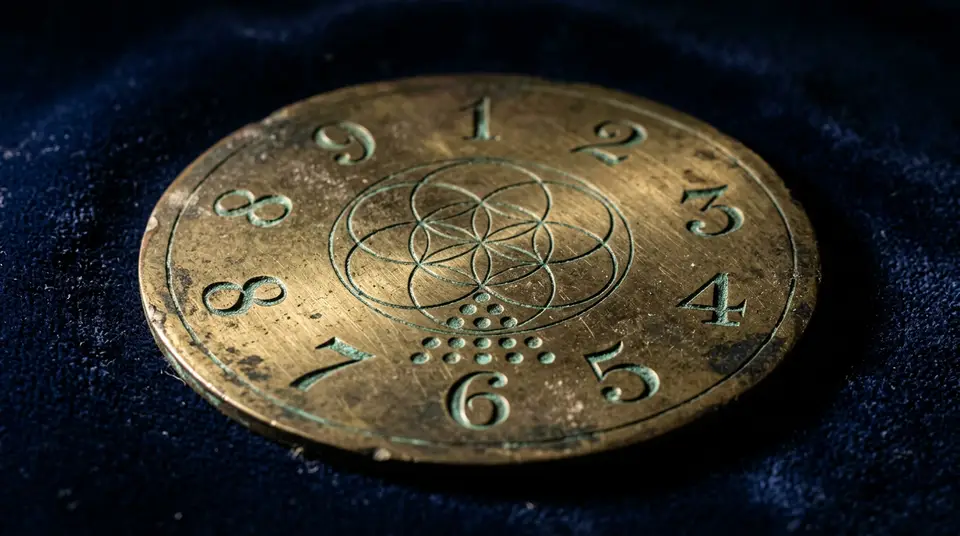
Most numerology sites open by telling you this is six thousand years old and leave it there. It makes for a better sales page. It is also not quite true, and the real story is more interesting. So here it is properly, with the parts that are solid separated from the parts that are not.
What is genuinely ancient: letters were numbers
For much of recorded history, letters and numbers were the same characters. Greek had no separate numerals: alpha was 1, beta 2, iota 10. Hebrew worked the same way. If you wrote a word, you had also, unavoidably, written a sum.
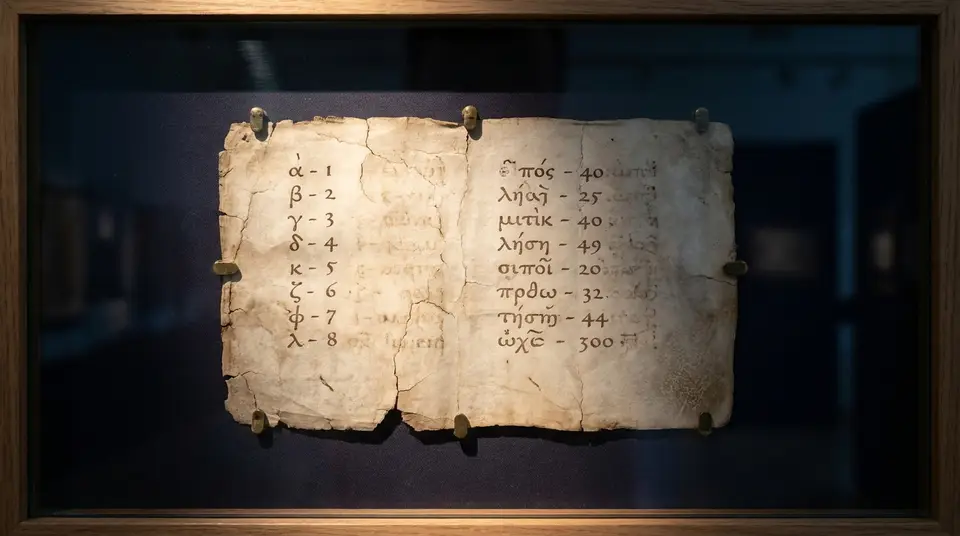
That overlap produced real interpretive practices. Isopsephy in Greek and gematria in Hebrew both involved adding a word's letter-values and comparing the total to other words. These are documented, studied by historians, and genuinely old. Graffiti survives from Pompeii where someone wrote that they loved the girl whose name totalled 545.
So the underlying instinct (that a name carries a number, and the number is worth thinking about) is ancient and cross-cultural. That part is not marketing.
What is not ancient: this particular table

The specific system this site uses (the 26-letter Latin alphabet mapped onto 1 through 9, reduced to a single digit, producing a Life Path, an Expression, a Soul Urge) is barely more than a century old.
It was largely assembled by L. Dow Balliett, an American writer who published The Philosophy of Numbers in 1908, drawing on the number symbolism circulating in late-Victorian esoteric circles. Her student Juno Jordan then spent decades turning it into something systematic and teachable, work laid out at length in her later book Numerology: The Romance in Your Name; her work through the mid-twentieth century is why the chart you just generated has the shape it does. Florence Campbell and others filled in more.
It is called "Pythagorean" because Pythagoras and his followers genuinely did hold that number was the underlying principle of reality. But there is no evidence Pythagoras used this table, and the attribution was applied long afterwards. Calling it Pythagorean is a bit like calling a modern guitar Spanish: it points at a real lineage without being a claim of authorship.
The table itself
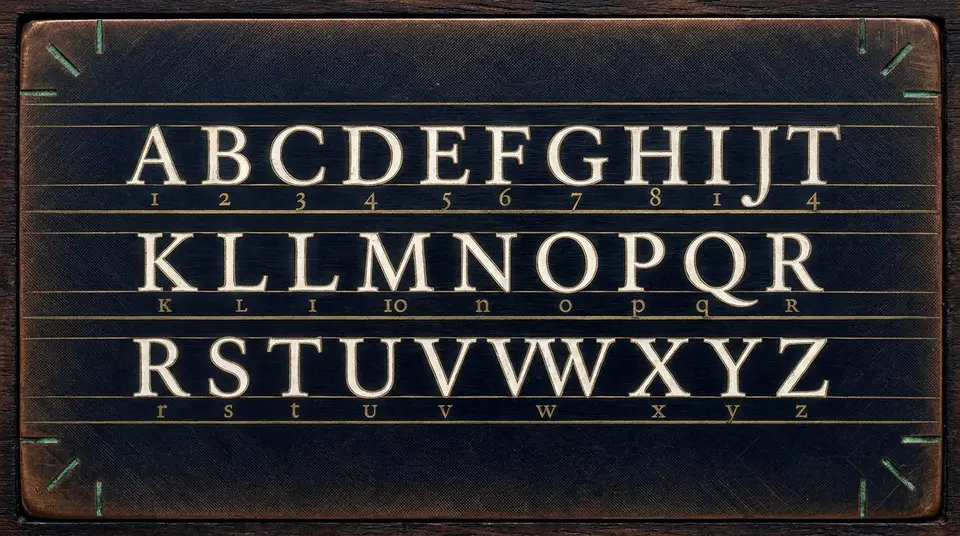
There is no secret to it. A is 1 through I is 9, then it repeats: J is 1, R is 9, S starts again at 1 and Z lands on 8. Add up the letters of a name, reduce the total by adding its digits together until one remains, except 11, 22 and 33, which by convention are kept whole.
You can do the whole thing on paper. That is deliberate on our part: every number in your chart has an information button showing its own arithmetic, so you never have to take our word for any of it. Each of the twelve possible Life Path figures has its own page working through this same reduction against a real date, alongside what the tradition associates with that number across a full chart. Life Path 1 is the simplest one to start with, since it takes the fewest steps to reach.
Why we tell you this
Two reasons, and neither is modesty.
The first is that you will find out anyway. Anyone curious enough to pay for a reading is curious enough to search for where it came from. A site that has already told them looks straight; a site that claimed ancient Egyptian origins looks like it was hoping they wouldn't check.
The second is that the honest version is a better story. "A century-old American system built on a genuinely ancient habit of reading names as numbers" is more interesting, and more credible, than a vague appeal to lost wisdom.
What this is and is not
The arithmetic is fixed. Two people entering the same name and date get the same numbers, every time, and you can verify every step.
The meanings are an interpretive tradition. They are not measurements. Nothing here has been demonstrated by controlled study, and we are not going to imply otherwise. What a reading can do is give you a structured, unfamiliar vocabulary for thinking about yourself, which is a real use, and the one most people are actually here for.
Read it the way you would read a good character study: as something to think with, not something to obey.
How is this worked out?
Is numerology actually ancient?
The underlying habit is: reading a name's letters as a number is documented in the ancient world, in Greek isopsephy and Hebrew gematria alike. The particular table this site uses (mapping the Latin alphabet onto 1 through 9 to produce a Life Path or an Expression number) is not that old. It was assembled starting in 1908 and is barely more than a century old. Popular numerology borrows the age of the first fact to cover the second.
Why is this system called Pythagorean if Pythagoras didn't create it?
Pythagoras and his followers genuinely held that number was the underlying principle of reality, so the name points at a real strand of philosophy. But there is no evidence he used this specific alphabet-to-number table: it did not exist yet. The "Pythagorean" label was attached to Balliett and Jordan's system well after the fact, the way a modern guitar can be called Spanish without claiming a Spaniard built it.
Does the arithmetic change if the history is uncertain?
No, and this is worth separating clearly. The arithmetic (reducing a name or a birth date to a single digit) is fixed, mechanical addition. Anyone can redo it by hand and get the same result, regardless of whether the table behind it is a century old or a thousand years old. What is genuinely uncertain is not the sum but what a given number is said to mean: that is an interpretive tradition, carried forward by Balliett, Jordan and those who followed them, not a discovery, and its age has no bearing on whether the arithmetic is correct. Those are two different questions, and only one of them has a checkable answer.